Can the Continued Hotness of Cannabisdiol CBD Create New Opportunities for the Chinese Market?
All cannabis contains tetrahydrocannabinol (THC) and cannabidiol (CBD). The classification of cannabis species depends on the content of THC. It has a hallucinogenic effect on the human body and can be classified into three categories according to the current EU standards. Cannabis (content <0.3%), recreational marijuana (content >0.5%), medical cannabis (content between 0.3-0.5%).
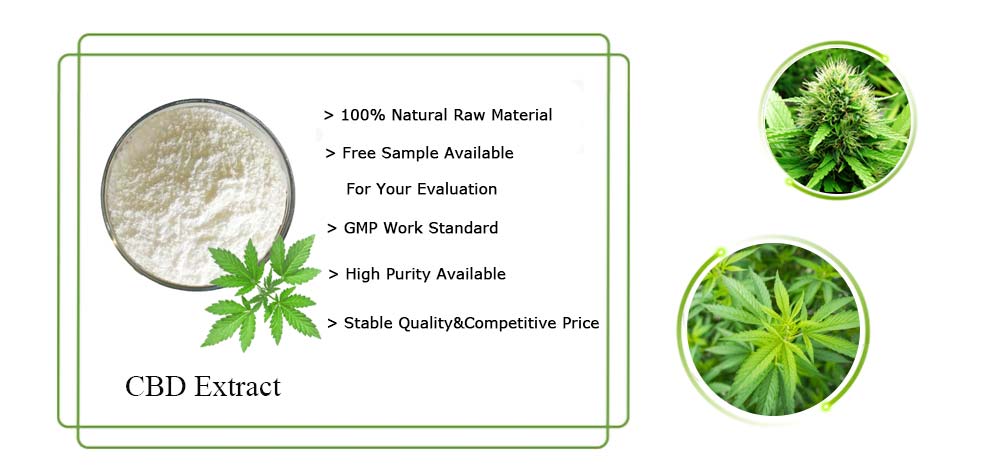
Industrial cannabis, also known as hemp in China, has a long history of planting and application, and of course it is mainly concentrated in the textile industry. At present, domestic industrial cannabis is mainly concentrated in the upstream, including planting and CBD purification. Taking planting as an example, the average content of CBD in China's cultivated cannabis varieties is 1%, while that in the United States is about 5%, which in turn leads to an increase in the cost of domestic CBD extraction and processing.
Can cross-border e-commerce become an opportunity for marijuana in the Chinese market?
In April 2019, Australian biopharmaceutical company MGC Pharmaceuticals announced that it has signed a distribution agreement with Yu Shop Global, a cross-border e-commerce platform, to introduce the four CBD nutrition products produced by the company into the eyes of Chinese consumers, includingCBD hemp protein powder, CBD. Branched chain amino acid capsules, water soluble CBD solution and CBD herbal V-Pen.
Yu Shop Global is a US-registered cross-border e-commerce platform that sells products from all over the world to the Chinese market, marketing mode for wired apps, and offline 1,500 retail partners, including a luxury spa shop. Selling to the "middle class and wealthy Chinese consumers." According to current market data, China has more than 350 million middle-class vitamin and supplement consumers, and it is estimated that the industry will spend more than 20 billion US dollars by 2020.
For the development of CBD products in the Chinese market, MGC Pharmaceuticals said it will take a more cautious approach to observe the performance of NPD in the Chinese market, and how it combines certain ingredients to better cater to the tastes of local consumers. The combination of Chinese herbal medicine and CBD is the company. One of the products to be developed in the Chinese market in the future.
The rise of CBD skin care trend
Cannabis CBD is regarded as the “new darling” in the skin care industry. It has anti-inflammatory effects and can be used to improve inflammatory symptoms such as acne, eczema and psoriasis. Many skin care brands have added “cannabis ingredients” as their selling points, especially emerging brands, including High. Beauty, Lord Jones. At the same time, some well-known brands have also added marijuana raw materials to the product formula, such as Estee Lauder's Origins and Sephora launched a "Hello, Calm Relaxing & Hydrating Face Mask" mask containing hemp seed oil.
Future Market Insights market data shows that the sales revenue of CBD skin care products is expected to exceed 645 million US dollars in 2019. It is expected that the compound annual growth rate of this market will exceed 33% in 2027.
"Domestic marijuana skin care products" has also become the focus of domestic and foreign markets. In November 2017, Hanyi Biotech launched the industrial marijuana skin care brand Cannaclear, which contains cannabis leaf extract and is mainly used for acne. At the same time, the "CBD BIO TECH" brand is also a major skin care product for cannabis, currently available on the Tmall platform. The sales of these two products are relatively common, partly because of the development of the domestic industrial cannabis industry chain, and consumer perception has a certain impact.
Recently, Guangzhou Langqi Industrial Co., Ltd. announced that it will sign an agreement with Longma Biotechnology Co., Ltd. to apply industrial cannabis in the field of household chemicals. Currently, it contains hand soap for cannabis seed oil and cannabis extract. The bath products have been included in the company's new product research and development plan. It is planned to complete the relevant formula design, production process design and related performance tests before November 2019. It is expected to be approved by the relevant approval and filed before March 2020. Achieve mass production.
According to the "Catalogue of Names of Used Cosmetic Materials" issued by the former State Food and Drug Administration (No. 105, 2015), cannabis leaf extract has been clearly used as a legal raw material for cosmetics, but can it be included in the cannabis leaf extract. The proportions they contain are not clearly limited. The part of the domestic market that claims to contain CBD skin care products is in the “play concept”, because it is illegal to add CBD as a single raw material in skin care products, and it is not known whether the cannabis leaf extract allowed in cosmetics contains CBD. .
In addition, if the CBD wants to be legally added to cosmetics, it must be submitted to the relevant state departments for approval and approval, and it can be sold or produced in China through safety assessment.
Industrial cannabis must be "certified" in every link
Taking industrial cannabis cultivation as an example, only Yunnan Province and Heilongjiang Province have enacted relevant regulations on the cultivation and processing of industrial cannabis in China. China regulates the source of industrial cannabis cultivation. Units/individuals who plant or process industrial cannabis are required to submit the required documents in accordance with the relevant procedures. As of now, the provinces that allow legal development of industrial cannabis in China are limited to Yunnan, Heilongjiang and Jilin provinces.
In terms of downstream product application, China strictly limits the practical application of industrial cannabis and its extracts in the downstream industrial chain, and more focuses on scientific research, fiber and textiles, and the CBD is subject to strict application supervision. In contrast, the application of foreign markets is more diversified, including food and beverage, medicine, health care products, and daily chemical products.
According to current laws and policies, the scope of industrial cannabis use is: cannabis can be used as a traditional Chinese medicine, and can also be used for health foods, cannabis leaf extracts and the like can be used for cosmetics. In other words, the CBD is not allowed for food, cosmetics and cosmetics. In addition to narcotic drugs or psychotropic drugs, the most important medical value of the CBD has not been added as a main active ingredient of drugs to drugs marketed in China.
Industrial cannabis in the early 2019 set off a frenzy in the domestic capital market, and a number of listed companies have entered the industrial cannabis field, and the related stocks soared. In order to make the market develop more stable, the "Notice on Strengthening Industrial Cannabis Control and Control" issued by the National Narcotics Control Commission further tightened the examination and approval of industrial cannabis licenses, but this did not cool the industrial cannabis stock market.


评论
发表评论